How Fulton Solved Unpredictable Purchase Timing with Monocle
Achieving a 97% increase in winback revenue per user by reaching customers at the perfect moment.
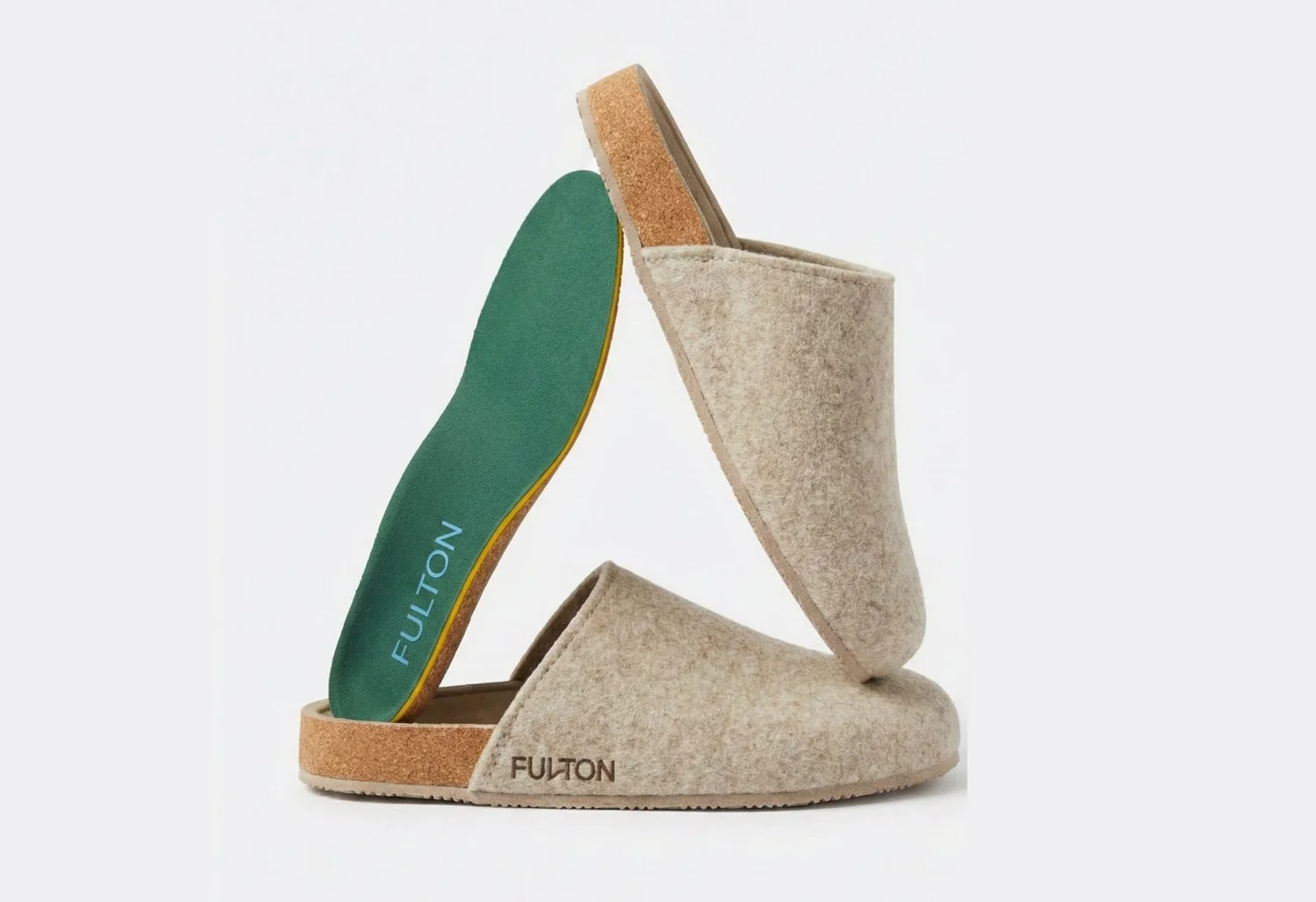
About Fulton
Fulton started with a simple question: what if we could offer customized arch support at a fraction of the price of orthotics? The answer: custom-molding cork insoles that stabilize your feet, align your body, and eliminate pain from head to toe—without the $400+ price tag of custom orthotics or the disappointment of drugstore gel foam.
Designed in NYC and handcrafted in Portugal, Fulton's cork technology molds to each customer's unique stride within the first 10 hours of wear. The brand has grown from a direct-to-consumer disruptor to a movement reshaping how people think about foot health. Every pair is made from natural materials and are carbon-negative to manufacture —because comfort shouldn't cost the planet. The product line includes the Classic Insole for everyday shoes, the Athletic Insole for high-impact activities and their newest House Shoe for comfort at home.
The Challenge
Fulton faced a retention challenge common to products with highly variable purchase cycles: every customer's timeline is different, and the data to predict their next purchase is limited.
"Part of the challenge is that it's very unpredictable," Libie Motchan, Fulton’s Co-Founder, explains. "People are very different in terms of when they purchase their next pair of insoles."
The Timing Puzzle
Customers need to replace insoles after approximately 500 miles of walking—but Fulton had no way of knowing how often each customer walks or how many pairs of shoes they rotate through.
"Some people will wear the same pair of shoes every single day and will probably need to replace their insoles in four or five months. Some people will have 10 different pairs of shoes and only wear that one pair once a week or so. Then they can go a year or two without replacing their insoles," says Motchan.
Beyond replacement, customers have multiple reasons to purchase: new shoes, worn-out insoles, gifts, extending shoe life, or trying Fulton's home slippers. Each trigger happens at different times for different customers.
Two Critical Goals
Before implementing Monocle, Fulton focused on two priorities:
1. Optimize welcome offers to maximize efficiency
With a focus on profitable customer acquisition, Fulton needed to convert site visitors at the highest possible rate while maintaining strong unit economics.
2. Identify optimal re-engagement timing
Rather than educated guesses on when customers would be ready for their next purchase, Fulton wanted to understand more precisely the moments when each customer was most likely to convert—whether for replacement insoles, new product categories or gifts.
"We're always trying to understand how we can keep customers engaged in a way that doesn't feel too overwhelming but is also very intentional—understanding exactly when they would be ready to purchase their next pair," Motchan notes.
Before Monocle, Fulton made educated guesses based on the limited data they had—primarily timing signals—but knew there was significant opportunity to improve by incorporating engagement and intent signals into their strategy.
The Solution (and the Skepticism)
Despite the clear need for better personalization, Motchan approached Monocle with healthy skepticism.
"To be honest, we've tested a lot of different AI platforms, so I did not go in with high expectations," she admits.
Her caution came from experience: "A lot of the tools that I've used in the past, specifically when it comes to e-commerce, have not felt fully ready and did not really meet the promises that they offered."
Fulton had already extensively A/B tested their welcome sign up unit and felt confident it was optimized.
Despite the caution, Fulton agreed to test Monocle on two use cases with rigorous control groups.
Use Case 1: AI-Optimized Welcome Offers
Instead of showing every site visitor the same offer, Monocle's AI analyzed each visitor's behavior and intent signals to determine the optimal offer for that individual customer.
Use Case 2: Intent-Based Winback Timing
For winback campaigns, Fulton tested Monocle's AI across multiple customer segments at different stages of their lifecycle. Rather than sending emails based purely on static rules, Monocle's AI factored in engagement signals and intent to determine the optimal moment to re-engage each customer.
The Results
The caution turned to enthusiasm as results rolled in.
Welcome Offer Performance
- 15% increase in revenue per user
I was very impressed. The welcome offer alone pays for Monocle by itself, separate from all the other things we're doing. Figuring out exactly what is the ideal offer for every customer is not something we could have done on our own.
Winback Campaign Performance
Mid-term winback:
- Revenue per user: +69%
Long-term winback:
- Revenue per user: +97%
Overall Impact
- 7X return on investment
"This is a huge unlock," says Motchan. "We know that customers love their insoles, but how do we engage with them after a year? How do we stay top of mind? The longer term is when we find it challenging because everyone is so different in their behavior with their shoes and their walking and their lifestyle. We never really knew how to predict it."
The results gave Motchan confidence that Monocle had cracked the timing code: "It gave me faith in the rest of the tools and offerings that Monocle has."
Implementation Experience
For a lean team, hands-off implementation was crucial.
"Monocle has the best team," Motchan says. "They've been just so helpful in setting everything up. They've really helped manage everything for me."
Even with Motchan's rigorous testing requirements and multiple control groups, the Monocle team accommodated every request. "They were incredibly helpful and accommodating and helped really set up the most controlled possible tests."
What's Next
Having proven the value of AI-powered timing optimization, Fulton is now expanding Monocle across their entire lifecycle program.
Motchan is particularly excited about Monocle's AI Journeys—where the AI selects not just the optimal timing, but also which content to send and how frequently to communicate with each customer based on their individual behavior and preferences.
"We have great email content, but we have no idea how customers will respond to individual emails," she explains.
Her vision is comprehensive:
I'm excited to implement Monocle across every single flow that we have and replace every single flow with AI Journeys. It feels like this is the future of email.
She's also optimistic about the compounding benefits: "The more time we spend working with Monocle, the better their technology will get as it learns more and has more data points from our customers. There's a lot of upside."
The Bottom Line
For retention marketers dealing with unpredictable purchase cycles or struggling to find the right moment to re-engage customers, Motchan's transformation from skeptic to advocate is telling.
"Monocle enables brands to understand the ideal time to engage with customers and meet them where they are, when they need to be addressed," she explains.
I'm an AI optimist, but a lot of tools haven't met their promises. Monocle meets the promises they make.