Blog Lobby
Top 10 D2C Marketing Trends for 2026
–
min. read
January 4, 2026

The D2C landscape is shifting faster than most marketing playbooks can keep up with. AI is reshaping discovery, customer expectations have fundamentally changed, and the old acquisition-first growth model is broken.
For retention and lifecycle marketers at leading D2C brands, here's what matters heading into 2026 and how to adapt your strategy.
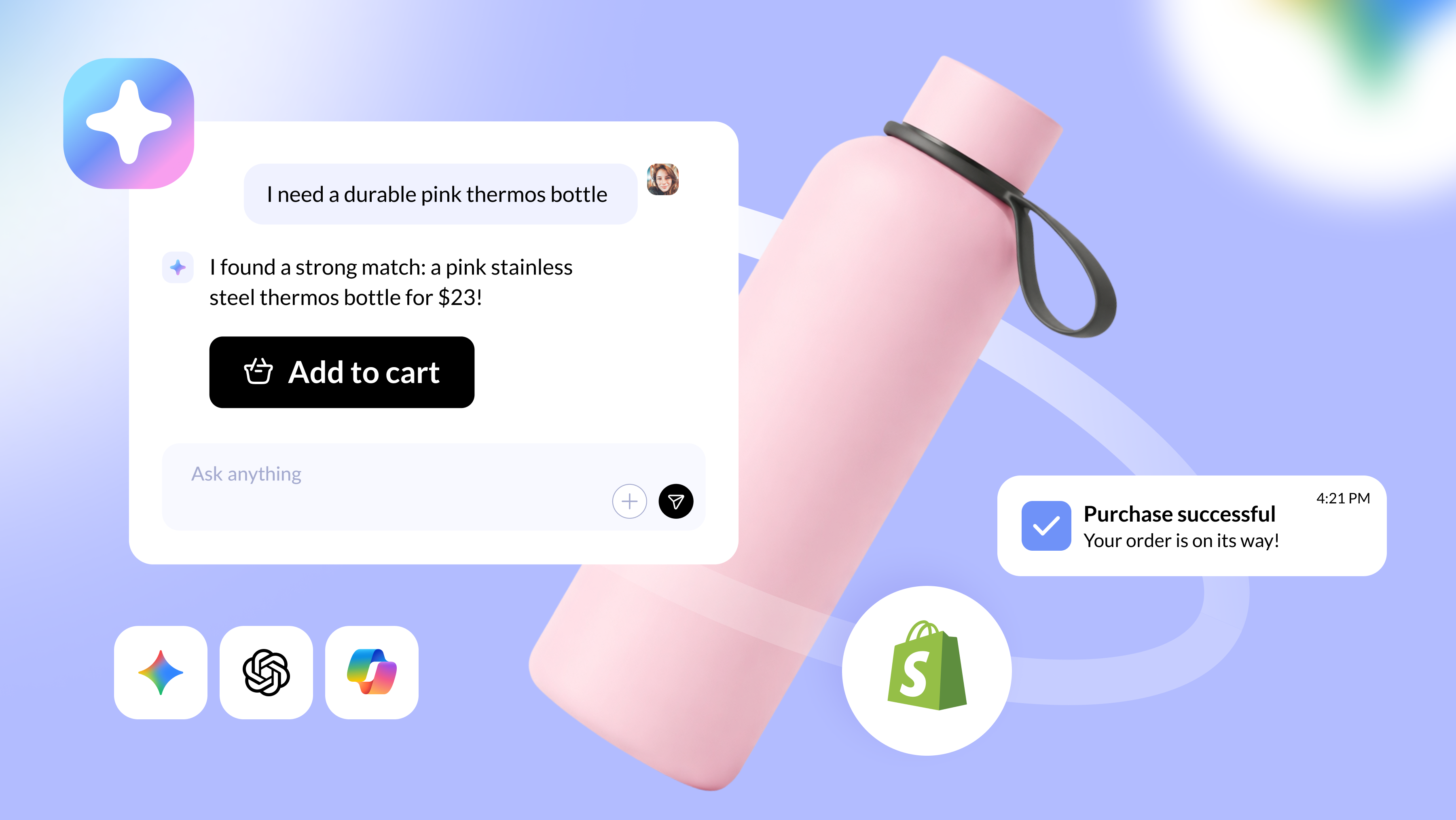
2026 could be the year AI becomes a significant discovery channel for D2C brands and where many buying journeys never touch a website at all.
Zero-click discovery, powered by ChatGPT, Perplexity, and Google SGE, means consumers get product recommendations, comparisons, and buying paths directly inside AI assistants without visiting your site. Over 60% of Gen Z and Millennials say AI tools influence their shopping decisions (McKinsey, 2025), and Perplexity reports product-related queries among its fastest-growing categories.
What this means for retention: Customers arriving via AI channels have already done extensive research and comparison shopping. They need different onboarding than those who browsed your site. Start segmenting by acquisition source and treating LLM-referred customers as a distinct cohort.
Most importantly: if discovery is fully personalized by AI assistants, retention must match that level of individualization or you risk breaking the customer experience.
Facing rising acquisition costs and a crowded digital marketplace, D2C brands in 2026 are continuing to shift their growth playbooks from “growth at any cost” to profitable growth. At the heart of this shift is an emphasis on customer retention and maximizing lifetime value (LTV) rather than pouring ever more budget into new customer acquisition. The logic is simple: keeping existing customers happy and engaged yields more sustainable revenue than constantly paying to replace churned customers.
With CAC up 60%+ over five years and acquisition becoming less predictable, the economics are clear: growing LTV is increasingly the only scalable path to profitability.
Acquiring a new customer costs 5-25X more than retaining one, and increasing retention by just 5% can boost profits by 25-95%. Yet many brands are still optimizing primarily for new customer acquisition.
The shift: Retention is no longer a "nice to have, "it's becoming a core growth strategy. The brands that figure out how to activate dormant customers, increase purchase frequency, and drive cross-sell at scale will have a fundamental advantage over those stuck on the acquisition treadmill.
In 2025, most brands experimented with AI-generated content. The results were mixed at best. Copy felt generic. Images missed the mark. Few teams trusted AI output enough to put it directly in market.
In 2026, that changes.
Advances in multimodal models are significantly improving the quality of AI-generated text and imagery, moving beyond the "slop" phase and into production-ready territory. Tools from OpenAI and Google are closing the gap between “usable” and “on-brand,” making it realistic for brands to generate emails, SMS, and visuals at scale without sacrificing voice or quality.
What’s different now: This isn’t about AI-written subject lines. It’s about generating full emails, SMS messages, and visual assets that can be tested and deployed with minimal human rework.
In 2026, brands that win will experiment with and deploy AI to dramatically increase creative throughput and experimentation without compromising brand integrity.
Static campaigns and set-it-and-forget-it marketing are becoming a thing of the past. Winning teams in 2026 will deliver real-time, dynamic experiences that respond instantly to customer behavior and context.
AI-driven systems can immediately adjust what content or offer someone sees based on their actions. This extends from real-time web personalization to on-the-spot email/SMS triggers to dynamic ad creative that adjusts based on context, location, or inventory levels.
Why it matters: Traditional triggers (cart abandon, purchase, browse) capture maybe 20-30% of meaningful customer intent. The other 70% goes undetected without more sophisticated pattern recognition.
Marketing that feels like a personal conversation, not a broadcast, keeps consumers engaged and drives higher conversion per interaction. In 2026, we’ll see more marketing teams implementing technological solutions that can deliver on this promise.
As third-party cookies disappear and acquisition becomes harder to attribute, first-party data is becoming the core growth asset for DTC brands.
Purchase history, browsing behavior, and email and SMS engagement now matter more than ever. Shopify and Salesforce both show brands shifting spend away from paid acquisition and toward owned channels as CAC rises and predictability drops.
The shift in 2026 isn’t just collecting first-party data. It’s activating it in real time. Static segments and quarterly updates can’t keep up with how customers actually behave. Leading DTC teams are using live behavioral signals to adapt timing, messaging, and offers at the individual level.
Zero-party data like quizzes and preferences plays a role, especially early on. But it works best when layered on top of behavioral data, not instead of it.
The takeaway: brands that treat first-party data as infrastructure, not reporting, will build more durable growth in 2026.
Traditional paid acquisition is losing effectiveness as customers become harder to reach and more expensive to convert. In response, D2C brands are cultivating communities and "superfan" customers to power organic growth.
Platforms like Discord, WhatsApp Groups, and private forums enable brands to rally their best customers, who generate word-of-mouth and trust. Surging distrust in paid ads and rising CAC are driving a return to organic tactics such as interactive communities, referral programs, and growth loops fueled by customer participation.
Why it matters: Loyal customers can be a growth engine. By turning your customer base into an active community that co-creates content and spreads the word, you reduce reliance on ever-pricier ad spend and future-proof your growth.
92% of marketers say sponsored influencer content outperforms organic brand posts in reach.
As polished ads flood feeds, consumers are tuning out generic brand messaging. What continues to work heading into 2026 is authenticity: creator-led storytelling, real customer voices, and content that feels human, not manufactured.
This isn’t new, but it’s accelerating. Brands are shifting budget toward influencers, UGC, and community-driven content because it consistently earns attention and trust.
The takeaway: Human, creator-driven marketing keeps outperforming scripted brand content, and that gap is only widening.
Consumers, especially Millennials and Gen Z, are increasingly making purchase decisions based on eco-friendly packaging. Consumer studies show that 59% of Millennials and 56% of Gen Z have actively chosen products with sustainable packaging recently, and 90% say they are more likely to buy from brands that prioritize it.
For D2C brands, packaging is one of the few repeat touchpoints customers physically experience. Sustainable packaging reinforces trust, aligns with values, and can increase loyalty and repeat purchases.
Why it matters in 2026: sustainability influences buying decisions, unboxing experiences, and long-term brand perception. Brands that make sustainable packaging a core part of their value proposition will continue to see stronger engagement and retention.
The way consumers discover and interact with brands is becoming increasingly conversational. The proliferation of voice assistants and AI chatbots is giving rise to conversational commerce, where people find and buy products through natural language interactions.
Nearly half of U.S. consumers (around 155 million people) use voice search for shopping inquiries, and about 32% have used voice commands to make direct purchases. The voice-shopping market worldwide is projected to reach around $62 billion in 2025.
What this requires: D2C brands should ensure content is voice-search friendly, focusing on conversational keywords and answering common questions. AI-powered chat interfaces on websites or messaging apps can handle inquiries, provide personalized recommendations, and complete transactions. These conversational tools remove friction for shoppers who value on-demand, hands-free interactions.
Even as digital breaks down geographic barriers, successful D2C brands are thinking locally on a global scale. In 2026, marketing strategies will emphasize localization, not just translating language, but tuning content and campaigns to resonate with the cultural context of different regions.
AI and marketing automation now allow brands to cost-effectively create many campaign variants tailored to various audiences. Meanwhile, audiences have developed an aversion to generic, one-size-fits-all marketing.
What this means: Localization will include adapting visuals, humor, influencers, payment methods, and campaign timing to each market's norms. Brands investing in this cultural fluency see higher engagement and conversion, as customers feel "this brand speaks my language" both literally and figuratively.
The common thread across these trends: D2C marketing is becoming more sophisticated, more customer-centric, and more reliant on earned relationships than rented attention.
The playbook that worked when CAC was predictable, customer journeys were linear, and paid acquisition drove growth doesn't work anymore. The brands that will win in 2026 are the ones that:
Learn how AI Journeys personalize the lifecycle experience for every customer.